Chrysler Crossfire – The Bold and Unusual American-German Sports Car
The Chrysler Crossfire is one of the most distinctive and unconventional cars ever produced by Chrysler. Manufactured between 2003 and 2008, the Crossfire was a unique collaboration between Chrysler and Mercedes-Benz, blending American styling with German engineering.
Although its production run was relatively short, the Crossfire left a lasting impression on the automotive world due to its striking design, rare proportions, and unusual market positioning. It remains a cult favorite among enthusiasts who appreciate bold design and niche sports cars.
🧭 Origins – A Transatlantic Collaboration
The Chrysler Crossfire was born during a period when DaimlerChrysler existed as a merged automotive group. This partnership allowed Chrysler to use Mercedes-Benz technology and platforms for some of its models.
The Crossfire was built on the same platform as the first-generation Mercedes SLK, which meant it shared:
- Engine components
- Chassis structure
- Transmission systems
However, Chrysler designed the body and interior styling completely independently, resulting in a car that looked nothing like its German sibling.
The goal was to create a premium sports coupe and roadster that could elevate Chrysler’s brand image in global markets.
🎨 Exterior Design – One of the Most Unusual Shapes in Modern Cars
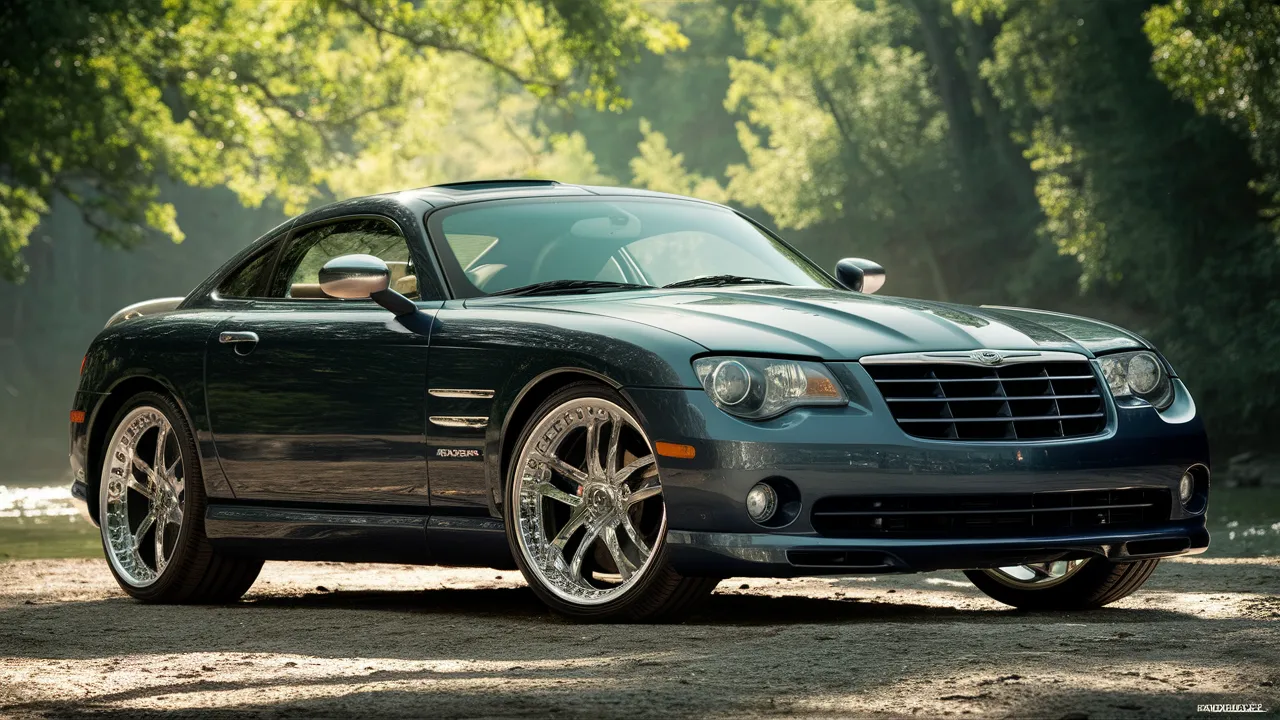
The most striking feature of the Crossfire is its bold and unconventional design. It was styled by automotive design firm Bertone, and its appearance is instantly recognizable.
Key design elements:
- Long hood with short rear overhang
- Wide rear fenders giving a muscular stance
- Boat-tail inspired rear design
- Central spine running along the body
- Distinctive mesh grille and headlight design
The rear of the car is especially unique, with a tapered “crossed” shape that inspired the name “Crossfire.”
While some people admired its originality, others found it polarizing. This split opinion is part of what makes the Crossfire memorable today.
🛋️ Interior – A Blend of Chrysler and Mercedes
Inside, the Crossfire combines Chrysler styling with Mercedes-Benz components.
Interior features:
- Leather seats (in higher trims)
- Simple driver-focused dashboard
- Mercedes-style switchgear and controls
- Compact cabin layout
- Analog gauges with sporty design
Although the interior was not as modern as some competitors at the time, it was solidly built and functional.
Cabin characteristics:
- Tight seating space due to coupe design
- Limited rear visibility
- Focus on driver experience rather than luxury comfort
- High-quality materials in key touchpoints
Overall, the interior reflects its sports car intentions rather than family practicality.
⚙️ Engine and Performance
The Chrysler Crossfire was offered with a small range of engine options, depending on the market and model year.
Engine options:
- 3.2-litre V6 engine (standard model)
- Supercharged V6 in Crossfire SRT-6 variant
The standard engine delivered:
- Around 215 horsepower
- Smooth automatic or manual transmission options
The SRT-6 version significantly improved performance:
- Over 330 horsepower
- Supercharged engine setup
- Faster acceleration and sharper handling
Performance highlights:
- 0–100 km/h in under 6 seconds (SRT-6)
- Rear-wheel drive layout
- Balanced weight distribution
- Stable highway cruising
While not a full-blown supercar, the Crossfire delivered solid performance for a compact sports coupe.
🚗 Driving Experience – Balanced but Not Aggressive
The Crossfire was designed more as a grand touring sports car than a track-focused machine.
Driving characteristics:
- Smooth and comfortable ride quality
- Predictable handling
- Stable at high speeds
- Light steering feel
Because it shared its platform with the Mercedes SLK, the Crossfire benefited from German engineering stability and refinement.
However, some enthusiasts criticized it for not being as sharp or engaging as rivals from BMW or Porsche.
🧠 Technology and Equipment
For its time, the Crossfire included a reasonable level of technology.
Features included:
- Climate control system
- Premium audio options
- Power-adjustable seats
- Stability and traction control
- Anti-lock braking system
The focus was more on driving experience than advanced electronics, which reflects its early-2000s design philosophy.
⚖️ Variants – Coupe and Roadster
The Chrysler Crossfire was available in two main body styles:
1. Coupe
- Fixed roof design
- More rigid structure
- Slightly better performance handling
2. Roadster
- Convertible soft-top roof
- More relaxed driving experience
- Increased emphasis on cruising enjoyment
The Roadster version added flexibility for drivers who wanted open-top motoring.
🏁 Crossfire SRT-6 – The Performance Model
The most powerful version of the Crossfire was the SRT-6, developed by Chrysler’s Street and Racing Technology division.
SRT-6 upgrades:
- Supercharged engine
- Enhanced suspension tuning
- Improved braking system
- More aggressive styling elements
This version significantly improved performance and made the Crossfire more competitive against sports car rivals.
📉 Market Reception and Criticism
When the Crossfire launched, it received mixed reactions.
Positive feedback:
- Unique and bold design
- Strong build quality
- Solid performance for its class
Criticisms:
- Unusual styling not universally liked
- Limited interior space
- Shared platform reduced exclusivity
- Competition offered more dynamic handling
Despite this, the Crossfire built a loyal fan base over time.
🏁 Competitors in the Sports Car Segment
During its production years, the Crossfire competed with several popular sports cars.
Main rivals included:
- BMW Z4
- Audi TT
- Mercedes-Benz SLK
Compared to these competitors, the Crossfire stood out for its design but was often considered less refined in driving dynamics.
🔧 Reliability and Ownership Experience
The Crossfire benefits from its Mercedes-based engineering, which contributes to decent mechanical reliability.
Ownership positives:
- Strong engine durability
- Solid chassis construction
- Relatively affordable maintenance compared to exotic cars
Ownership challenges:
- Limited parts availability in some regions
- Specialized styling components can be expensive
- Interior space limitations
Overall, it is considered a reasonably reliable niche sports car.
🌍 Legacy of the Chrysler Crossfire
Although production ended in 2008, the Crossfire remains a notable car in Chrysler’s history.
Its legacy includes:
- Bold and experimental design language
- Collaboration between American and German engineering
- Cult following among enthusiasts
- Recognition as a unique early-2000s sports car
It represents a time when manufacturers experimented more freely with design and global partnerships.
🧾 Conclusion
The Chrysler Crossfire is a fascinating example of early 2000s automotive experimentation. Produced by Chrysler, it combined Mercedes-Benz engineering with bold American design to create something truly unique.