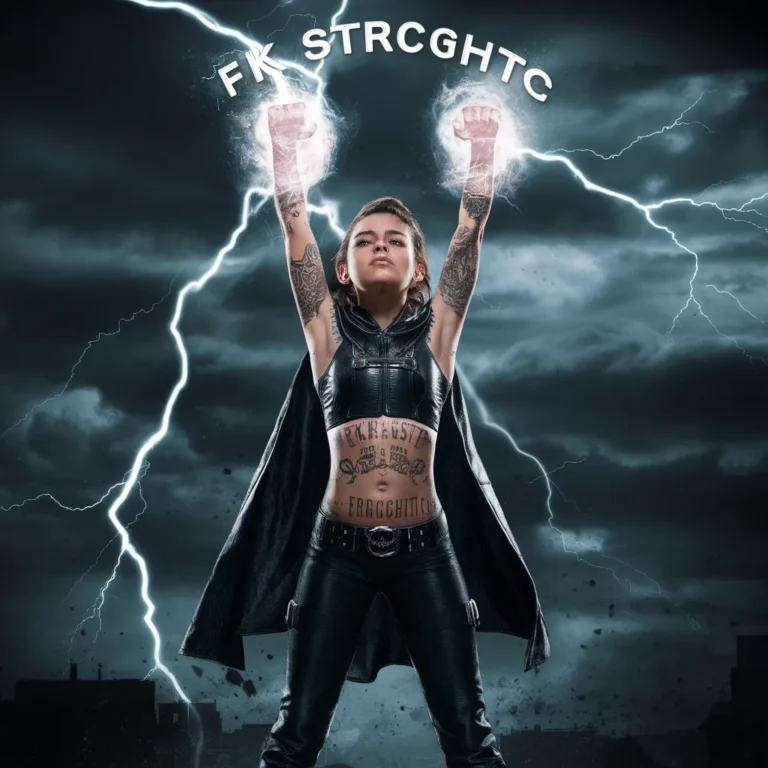
FKSTRCGHTC: The Rise of Raw Digital Expression in a Filtered World
You’ve probably seen strange, unpronounceable strings like fkstrcghtc floating around online and thought, what does this even mean? That confusion is exactly the point. In a digital world where everything is polished, optimized, and explained, something like fkstrcghtc stands out because it refuses to be easily understood.
At first glance, fkstrcghtc looks like a random cluster of letters. But look closer, and it starts to feel intentional—almost like a compressed message, stripped of vowels, softened edges, and traditional structure. This kind of expression is becoming more common in modern internet culture, where speed, identity, and creativity collide.
So what is fkstrcghtc really? And why are people drawn to it?
The Meaning Behind FKSTRCGHTC
Fkstrcghtc doesn’t have a fixed dictionary definition, and that’s part of its appeal. It belongs to a growing category of digital language that prioritizes expression over clarity. These are words or strings that feel meaningful without needing to be fully decoded.
If you break it down, fkstrcghtc could be interpreted as a stylized or compressed version of something like “fuck straight” or “fake straight chaotic,” depending on context. But the exact meaning isn’t the goal. The feeling is.
This kind of ambiguity gives users freedom. You can project your own interpretation onto it. It becomes personal, adaptable, and fluid.
But why are people moving away from clear language in the first place?
The Shift Toward Compressed Communication
Online communication has changed dramatically over the past decade. Attention spans are shorter, platforms are faster, and content is more competitive than ever.
According to a Microsoft attention study, the average human attention span dropped to around 8 seconds in recent years. Whether that number is exact or not, the trend is clear—people want faster, sharper communication.
That’s where compressed language like fkstrcghtc comes in.
Instead of typing full sentences, users create shorthand that feels immediate and raw. It’s not about being grammatically correct. It’s about being emotionally precise in the shortest possible form.
Think about how “LOL” replaced “laughing out loud.” Or how “IDK” replaced full explanations. Fkstrcghtc is just a more extreme version of that evolution.
Identity and Digital Aesthetics
Language online isn’t just about communication anymore—it’s about identity. The way you type, the words you choose, and even the structure of your text all signal who you are.
Fkstrcghtc fits into a specific aesthetic: raw, unfiltered, slightly chaotic, and intentionally obscure. It’s often used by people who want to stand out from mainstream, overly polished content.
There’s a kind of rebellion in it.
Instead of presenting something clean and easy to understand, fkstrcghtc forces the reader to pause. It disrupts the flow. And in doing so, it captures attention.
Isn’t that exactly what everyone is trying to do online?
The Psychology of Confusion and Curiosity
Humans are naturally curious. When we see something we don’t understand, our brains try to resolve that gap. This is known as the “curiosity gap” in psychology.
Fkstrcghtc triggers that gap immediately.
You see it and think, what is this? That question pulls you in. Even if you never find a clear answer, the process of trying to understand creates engagement.
Marketing studies have shown that content that creates curiosity can increase user engagement by up to 40%. That’s why headlines often leave something unsaid.
Fkstrcghtc does the same thing—but in a more abstract way.
Real-World Example: Viral Language Trends
Consider how terms like “yeet,” “sus,” or “rizz” exploded online. Most people didn’t understand them at first. But that confusion didn’t stop them—it spread them faster.
Fkstrcghtc follows a similar pattern, but it pushes the idea further. Instead of a new word with a clear meaning, it’s a structure that resists definition.
A small online community might start using it. Then others pick it up, interpret it differently, and spread it across platforms like TikTok, Twitter, or Discord.
Before long, it becomes part of a shared digital language—even if no one fully agrees on what it means.
The Contrarian Insight: Clarity Is Overrated
We’ve been taught that communication should always be clear and direct. But online culture is proving that’s not always true.
Sometimes, being unclear is more powerful.
Fkstrcghtc works because it leaves space for interpretation. It invites the reader to participate, not just consume. Instead of delivering a fixed message, it creates a shared experience.
That’s a different kind of communication—one that values interaction over explanation.
So maybe the goal isn’t always to be understood immediately. Maybe the goal is to be felt.
Creativity Through Constraints
Another reason fkstrcghtc is interesting is that it shows how creativity thrives under constraints. By removing vowels and traditional structure, you’re forced to think differently.
This is similar to how poets use limited syllables or how designers work within strict layouts. Constraints push innovation.
When you see something like fkstrcghtc, your brain tries to reconstruct it. You fill in the gaps. You create meaning where none is explicitly given.
That process is creative, even if you don’t realize it.
The Role of FKSTRCGHTC in Digital Communities
Every online community develops its own language. It’s a way of signaling belonging. If you understand the terms, you’re part of the group. If you don’t, you’re outside of it.
Fkstrcghtc can act as a kind of gatekeeper.
Not in a negative way, but in a cultural one. It creates a shared code among people who use it. And that shared code builds connection.
Think about gaming communities, meme culture, or niche forums. They all have their own shorthand, jokes, and references.
Fkstrcghtc fits into that ecosystem as a flexible, evolving symbol.
Limitations and Drawbacks
Of course, this kind of expression isn’t perfect.
The biggest drawback is accessibility. Not everyone will understand or appreciate it. For some people, it just looks like noise.
There’s also the risk of overuse. If everyone starts using obscure, compressed language, communication can become fragmented and confusing.
And in professional or formal settings, it simply doesn’t work. Clarity still matters in many contexts.
So like any tool, fkstrcghtc has its place—but it’s not universal.
How to Use FKSTRCGHTC Effectively
If you’re thinking about using expressions like fkstrcghtc, the key is intention.
Use it where it adds value—not just for the sake of being different.
- In creative writing, it can add texture and intrigue
- In social media, it can capture attention and spark curiosity
- In niche communities, it can build identity and connection
But always consider your audience. If your goal is clear communication, this style might not be the best fit.
So ask yourself—what are you trying to achieve?